
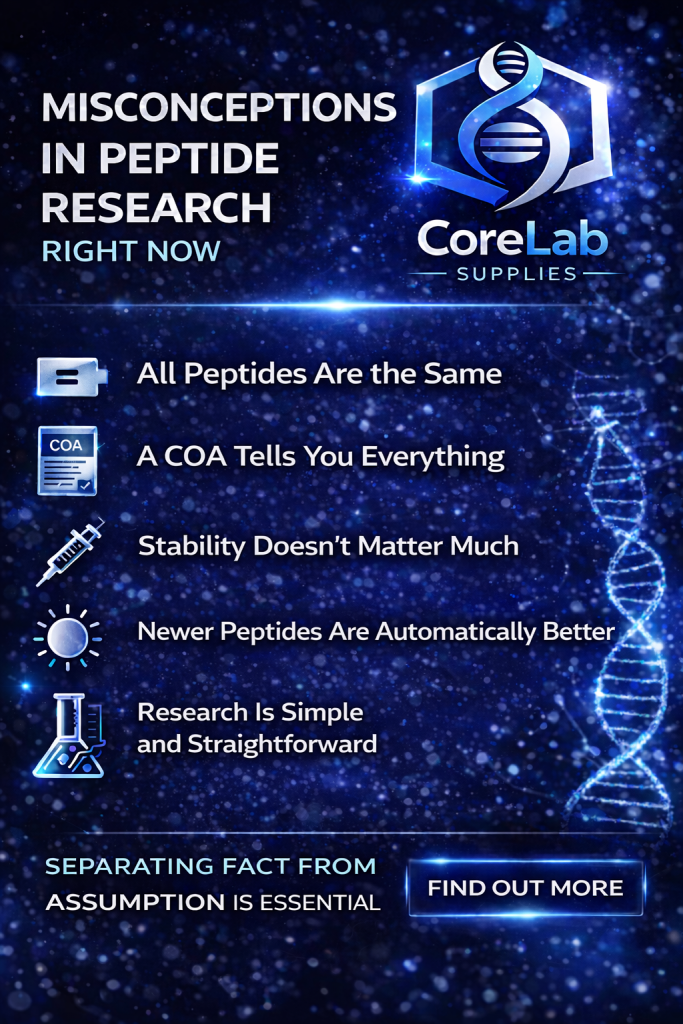
The Biggest Misconceptions in Peptide Research Right Now
Misconceptions in peptide research are becoming increasingly common as interest in this field continues to grow. From assumptions around purity and testing to misunderstandings about stability and emerging compounds, inaccurate information can quickly spread. Understanding these misconceptions in peptide research is essential for building a clearer, more informed approach to how these compounds are viewed and studied in modern research environments.
1. “All Peptides Are the Same”
One of the most common misunderstandings is that peptides with the same name are identical.
In reality, variations can exist in:
Purity levels
Synthesis processes
Handling and storage conditions
Even small differences can influence how a compound behaves in a research setting.
Create a image from this blog
2. “A COA Tells You Everything”
Certificates of Analysis are important — but they are often misunderstood.
A COA typically represents:
A specific batch
A specific test point in time
It does not always account for:
Storage conditions after testing
Handling between production and use
Degradation over time
Understanding the limitations of documentation is key.
3. “Stability Doesn’t Matter Much”
Stability is often overlooked — but it plays a major role.
Factors like:
Temperature
Light exposure
Reconstitution timing
can all impact compound integrity and consistency in research findings.
4. “Newer Peptides Are Automatically Better”
There is often hype around newly emerging compounds.
However:
Many are still in early-stage research
Data can be limited
Mechanisms are not fully understood
New does not always mean better — just less explored.
5. “Research Is Simple and Straightforward”
Peptide research is complex.
It involves:
Multiple interacting pathways
Variable conditions
Detailed analytical processes
Oversimplifying it can lead to misunderstandings and poor interpretation of results.
Continue Your Research
Staying informed is only part of the process.
Access to consistent compounds and ongoing insights helps support a more structured approach to research.